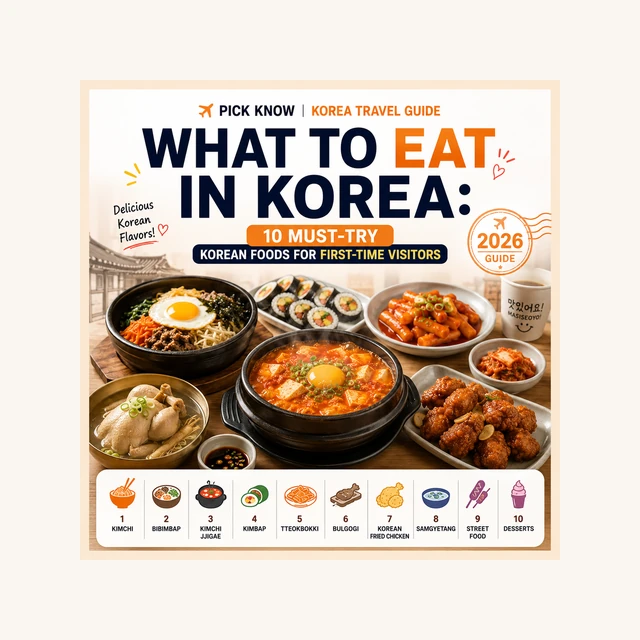
Visiting Korea for the first time? Figuring out what to eat in Korea can be one of the most exciting—and overwhelming—parts of planning your trip.
From sizzling Korean barbecue to comforting stews and spicy street food, Korean cuisine has something for almost every taste.
You don’t need to try everything at once. If it’s your first trip, these 10 must-try Korean foods are a great place to start.
────────────────────
🍚 1. Bibimbap — The Perfect Korean Starter
Bibimbap is one of the easiest Korean dishes to recommend to first-time visitors.
A bowl of rice is topped with colorful vegetables, meat, egg, and gochujang, a Korean red pepper paste. You mix everything together before eating.
Why try it?
- Easy for beginners
- Colorful and filling
- Available throughout Korea
- Spice level can often be adjusted
PICK KNOW TIP
Don’t add all the gochujang immediately.
Start with a small amount, mix everything together, taste it, and add more if you want extra spice.
────────────────────
🥩 2. Samgyeopsal — Korean BBQ
Few food experiences feel more Korean than grilling meat right at your table.
Samgyeopsal is thick-cut pork belly cooked on a tabletop grill and usually eaten with lettuce, garlic, dipping sauces, kimchi, and other side dishes.
A popular way to eat it is to make a ssam:
Lettuce + meat + sauce + garlic → wrap it → eat it in one bite.
It’s an especially fun meal when you’re traveling with friends or family.
PICK KNOW TIP
Don’t worry if you’re not sure how to grill the meat.
At many restaurants, staff may help cook it or let you know when it’s ready to eat. Just follow the restaurant’s setup and enjoy the experience.
────────────────────
🍗 3. Korean Fried Chicken
Korean fried chicken has become famous around the world, but eating it in Korea is still an experience worth having.
You’ll find everything from crispy original fried chicken to sweet-and-spicy yangnyeom chicken.
Many restaurants allow you to order half-and-half, so you can try two flavors in one order.
And yes—chicken and beer is such a popular combination in Korea that it has its own nickname:
Chimaek = chicken + maekju (beer)
It’s a classic choice for a casual evening meal.
────────────────────
🌶️ 4. Tteokbokki — Korea’s Iconic Street Food
Tteokbokki consists of chewy rice cakes cooked in a spicy and slightly sweet red sauce.
It’s one of Korea’s most recognizable street foods.
You’ll find it at traditional markets, street-food stalls, Korean snack restaurants known as bunsik shops, and even convenience stores.
PICK KNOW TIP
Be careful if you’re sensitive to spicy food.
Tteokbokki can look harmless, but some versions are surprisingly hot. There’s no shame in starting with something milder!
────────────────────
🍜 5. Ramyeon — Simple but Essential
You may already know Korean instant noodles from K-dramas, movies, or social media.
But eating ramyeon in Korea—especially at a convenience store—has become part of the travel experience for many visitors.
Convenience stores offer a huge selection, and some locations provide hot-water stations or cooking machines so you can prepare your noodles immediately.
Try adding:
- Egg
- Cheese
- Kimchi
- Triangle gimbap
for an easy Korean-style convenience store meal.
────────────────────
🥟 6. Mandu — Korean Dumplings
Mandu are Korean dumplings filled with ingredients such as meat, vegetables, tofu, or kimchi.
They can be steamed, boiled, or fried.
If you want something familiar and relatively easy to eat on your first day in Korea, mandu is an excellent choice.
You’ll find them in restaurants, traditional markets, and casual eateries throughout the country.
────────────────────
🍲 7. Kimchi Jjigae — Korean Comfort Food
Kimchi jjigae is a hot stew made with well-fermented kimchi and ingredients such as pork or tofu.
It usually arrives bubbling hot and is eaten with rice and side dishes.
The flavor is spicy, sour, savory, and deeply comforting.
This is the kind of everyday Korean meal that’s worth trying if you want to experience something beyond the dishes most commonly promoted to tourists.
PICK KNOW TIP
Kimchi jjigae is usually eaten with rice, rather than like a soup on its own.
Try a spoonful of rice together with the stew—that’s much closer to how Koreans normally enjoy it.
────────────────────
🥩 8. Bulgogi — Sweet and Savory Beef
If spicy food isn’t your thing, try bulgogi.
Thin slices of beef are marinated in a sweet and savory sauce and then grilled or stir-fried.
Because the flavor is mild compared with many spicy Korean dishes, bulgogi is one of the easiest choices for visitors who are new to Korean cuisine.
It’s also a good option when you’re traveling with a group that has different spice preferences.
────────────────────
🍙 9. Gimbap — Perfect for a Quick Meal
Gimbap is made by rolling rice and various ingredients in dried seaweed and slicing the roll into bite-sized pieces.
Common fillings include vegetables, egg, ham, tuna, beef, or cheese.
It’s inexpensive, portable, and easy to find.
Gimbap is especially useful when you need a quick breakfast, train snack, or simple meal between sightseeing stops.
PICK KNOW TIP
Don’t confuse gimbap with Japanese sushi.
They may look similar at first glance, but the ingredients, seasoning, and overall flavor can be quite different.
────────────────────
🥞 10. Hotteok — A Sweet Street Snack
Finish with something sweet.
Hotteok is a Korean pancake typically filled with a sweet mixture that may include brown sugar, cinnamon, and nuts.
It’s cooked until the outside becomes golden while the filling inside turns hot and syrupy.
Hotteok is particularly satisfying during Korea’s colder months.
But there’s one important rule:
Be careful with your first bite!
The filling inside can be extremely hot.
────────────────────
🌶️ What If You Can’t Handle Spicy Korean Food?
Don’t worry.
Not all Korean food is spicy.
Good beginner-friendly options include:
- Bulgogi
- Gimbap
- Mandu
- Samgyeopsal
- Korean fried chicken without spicy sauce
- Bibimbap with less gochujang
You can also ask:
“Is this spicy?”
In Korean:
“Igeo maewoyo?” (이거 매워요?)
It means “Is this spicy?”
Restaurants in popular tourist areas may also have English menus or staff familiar with international visitors.
────────────────────
🥢 One Thing to Know About Korean Side Dishes
At many Korean restaurants, your meal will come with several small side dishes called banchan.
Kimchi is the most famous, but you may also receive vegetables, pickles, tofu, or other small dishes.
Don’t assume you accidentally ordered them.
They’re simply part of the Korean dining experience.
And don’t be surprised if the selection of banchan differs from one restaurant to another.
────────────────────
📍 Where Should You Try Korean Food?
You don’t need to visit expensive or famous restaurants for every meal.
Some memorable Korean food experiences can come from:
- Traditional markets
- Neighborhood restaurants
- Korean BBQ restaurants
- Street-food stalls
- Convenience stores
- Small local eateries
If you see a restaurant busy with local diners around lunchtime or dinner, it can be worth taking a closer look.
PICK KNOW TIP
Don’t build your entire food itinerary around restaurants that became famous on social media.
Trying a simple neighborhood restaurant can sometimes be just as memorable—and gives you another side of everyday life in Korea.
────────────────────
✅ What to Eat in Korea on Your First Trip
Still not sure what to eat in Korea?
If you only have a few days, start with:
Bibimbap → Easy first Korean meal
Samgyeopsal → Essential Korean BBQ experience
Tteokbokki → Classic Korean street food
Korean Fried Chicken → Great casual evening meal
Gimbap → Easy breakfast or snack
Kimchi Jjigae → Everyday Korean comfort food
You don’t have to try everything at once.
One of the best parts of traveling around Korea is discovering new dishes neighborhood by neighborhood.
Come hungry—Korea will take care of the rest.
────────────────────
Last updated: August 2026
Menus, ingredients, prices, and availability can vary by restaurant and location. If you have food allergies or dietary restrictions, always confirm ingredients with the restaurant before ordering.
Leave a Reply